Define what you need to learn
Observation is an opportunity to understand the profession as well as meet application requirements. Before looking for placements, review the expectations of the programs on your shortlist and identify the questions you have about physical therapy work. You might want to understand how a therapist explains a plan, adapts communication, or collaborates with other professionals.
Separate a school's stated requirement from your own learning goal. If you need a particular setting, put it on the outreach list. If the school simply recommends varied experiences, record that as a recommendation rather than a mandatory quota. There is no single number of settings or hours that guarantees an admissions outcome.
Make a small, organized contact list
Start with facilities you can realistically reach and a schedule you can maintain. APTA suggests respectfully contacting clinics, hospitals, long-term care facilities, and other local healthcare settings about observation opportunities. Your university's pre-health office or an existing professional contact may also help you identify the appropriate person to ask.
Record the facility, setting, contact method, date contacted, response, and next step. Contacting a handful of well-chosen facilities with a clear request is easier to manage than sending dozens of vague messages. If an organization has a formal volunteer application, use that route. A clinician may not be able to approve a visitor outside the facility's established process.
Write a request that is easy to answer
Keep the initial message short. Introduce yourself as a prospective DPT applicant, explain your interest in observing the setting, give a realistic availability window, and ask whether the facility accepts observers. Mention that you are willing to complete its onboarding requirements. Avoid sending transcripts, personal medical information, or a long essay unless specifically requested.
A sample opening is: 'I am preparing to apply to DPT programs and would like to learn about physical therapy in your setting. Do you accept student observers, and if so, who coordinates the process? I am generally available on Tuesday mornings during the next month.' Adjust the details honestly. The goal is a clear question, not a script that claims a relationship you do not have.
Plan for the practical steps
Ask what must be completed before your first visit, what clothing is appropriate, where to arrive, and whom to contact if your schedule changes. The facility determines its requirements. Do not assume another clinic's process applies. Put any orientation or paperwork dates in your task list so a delayed administrative step does not become a missed visit.
If you do not receive a response, one polite follow-up after a reasonable interval is a useful planning choice. If the facility declines or cannot accommodate your schedule, thank the contact and move to another option. A refusal can reflect staffing, privacy, or capacity constraints; it is not a verdict on your suitability for the profession.
Make the visit count as learning
Arrive prepared, follow staff instructions, and let the therapist guide when questions are appropriate. You are observing within the role the facility permits. Ask about the reasoning behind the work at an appropriate moment, and respect any limits on access or discussion. Keep notes focused on professional learning without recording identifying patient information.
Afterward, update your log and write a brief reflection in your own words. Confirm the method for documenting attendance and the contact you should use for future verification. Send a concise thank-you if appropriate. A well-maintained record helps you describe what you actually learned, while a dependable routine makes it easier to continue observing alongside classes and other responsibilities.
- Choose facilities you can reach consistently.
- Ask about the official observer or volunteer process.
- Make availability and the request clear.
- Confirm documentation procedures early.
- Log completed hours and learning promptly.
Sources & further reading
- APTA: physical therapist admissions process ↗
- APTA: suggested preparation timeline ↗
- Liaison: observation-hour documentation ↗
Program requirements and application rules can change. Use the official pages for the entry cycle you plan to apply to. This guide supports preparation and does not establish eligibility.
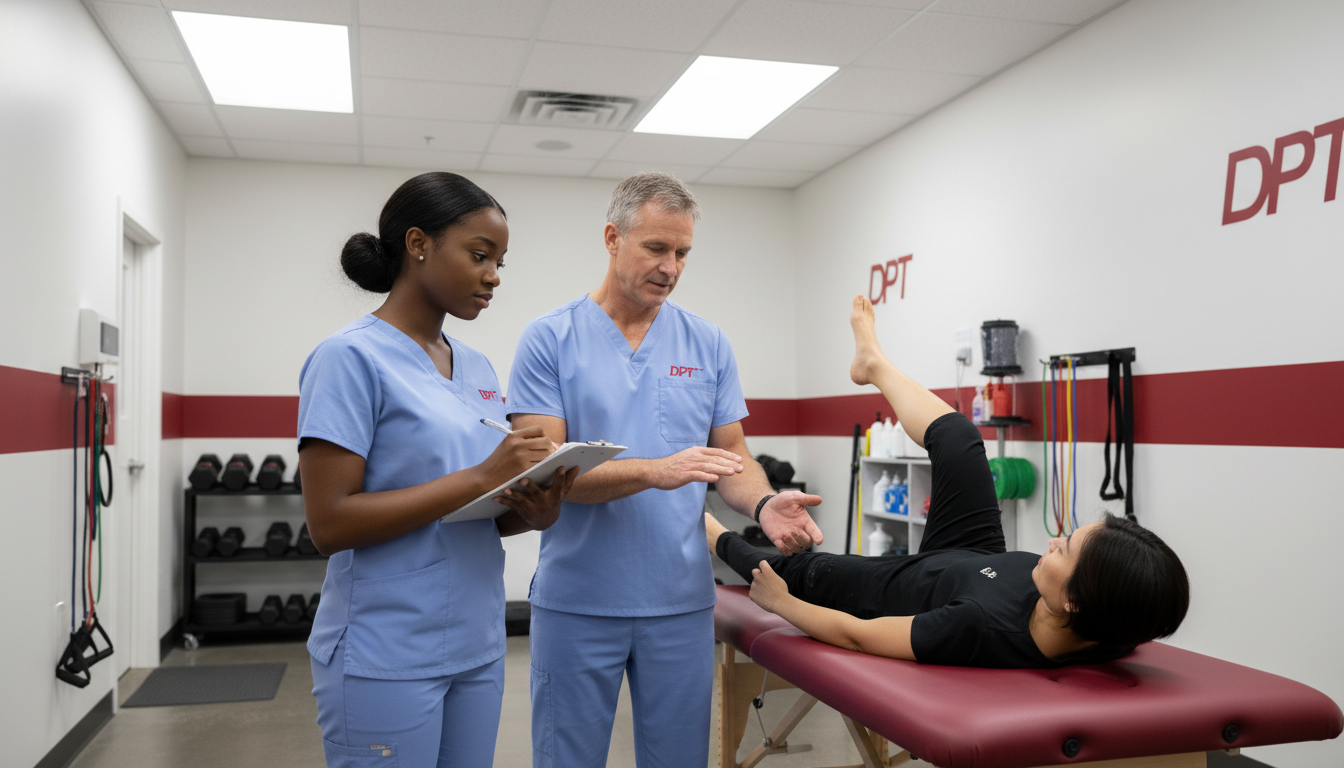
Illustrative image from the HPD library; it does not depict a named program, applicant, or endorsement.
Put this into your plan.
Give the next step a place to live.