Record the details while they are fresh
A useful observation log is easy to update after each visit. Record the date, facility, setting, hours completed, and the supervisor you worked with. Keep contact details accurate and use a consistent facility name so several visits do not become several seemingly unrelated experiences. If a session is canceled, remove planned hours rather than counting them as completed.
Add a short reflection separately from the hour total. What did you learn about the therapist's role, communication, or the setting? Keep the reflection about your learning and avoid patient names or identifying clinical details. These notes can help you remember an experience later without becoming a patient record or an embellished application story.
Separate completed, planned, and verified
Liaison's observation instructions distinguish completed hours from planned or in-progress hours and describe several verification options. Your personal tracker should preserve those distinctions. An appointment on your calendar is planned; a visit you attended is completed; confirmation from the appropriate person is a separate status. Neither your own checkmark nor entering hours in PTCAS verifies the experience; the school determines what documentation it accepts.
PTCAS permits applicants to request supervisor verification or upload a signed form where applicable, and some experiences may be entered without verification when the selected programs do not require it. Review the current instructions and each school's requirements. The same total can be documented correctly for one program yet lack information needed by another.
Agree on the process early
Before accumulating weeks of visits, ask the facility how it prefers to track attendance and whom you should contact when verification is needed. Confirm the correct email address and whether the supervisor wants a running log or a summary. Follow the facility's procedures rather than arriving at application time with an unexpected request.
If your supervisor changes roles, update your contact record while you can still reach them. Keep any signed documentation in a place you can find later, with a clear filename that includes the facility and date range. A private folder plus an export of your log is more reliable than relying entirely on a text-message thread.
Review the settings against your shortlist
Programs set their own expectations for experience. Duke, for example, currently requires verified in-person observation with a licensed PT and encourages exposure to different settings. That example should prompt you to check your own schools, not adopt Duke's requirement as a universal target. Record required settings separately from recommendations.
Consider a fictional log with 24 completed outpatient hours, 10 planned inpatient hours, and an unconfirmed supervisor email. The immediate task is not to describe the record as 34 verified hours. It is to confirm the contact, complete the scheduled experience, and track the verification process. Keeping the categories separate prevents accidental overstatement.
Reconcile before transferring information
Before entering information into PTCAS, total each facility and date range, check for duplicate visits, and compare the result with the supervisor's record. Review how the current application asks you to classify the setting and experience. Do not guess a category simply because its label looks similar to the clinic's marketing description.
Liaison notes that submitted observation entries cannot be edited or removed, though additional entries may be added. That makes a deliberate final review worthwhile. Export your preparation record, confirm the details, and then enter or update the official application following its instructions. Our dashboard helps organize the record; it does not certify hours or send official verification requests.
- Record each visit promptly and avoid duplicate entries.
- Keep planned hours out of completed totals.
- Track verification separately from attendance.
- Maintain supervisor contact information.
- Keep reflections free of patient-identifying details.
Sources & further reading
Program requirements and application rules can change. Use the official pages for the entry cycle you plan to apply to. This guide supports preparation and does not establish eligibility.
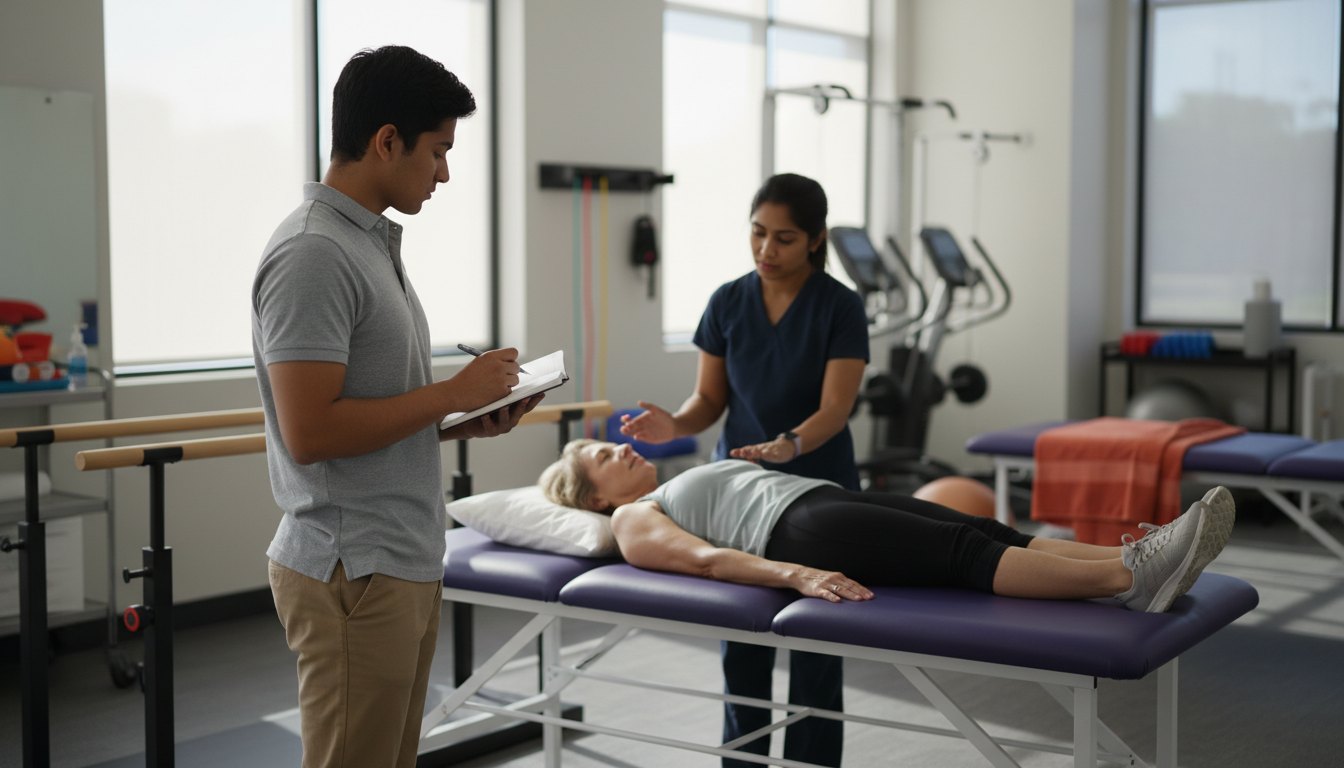
Illustrative image from the HPD library; it does not depict a named program, applicant, or endorsement.
Put this into your plan.
Give the next step a place to live.